
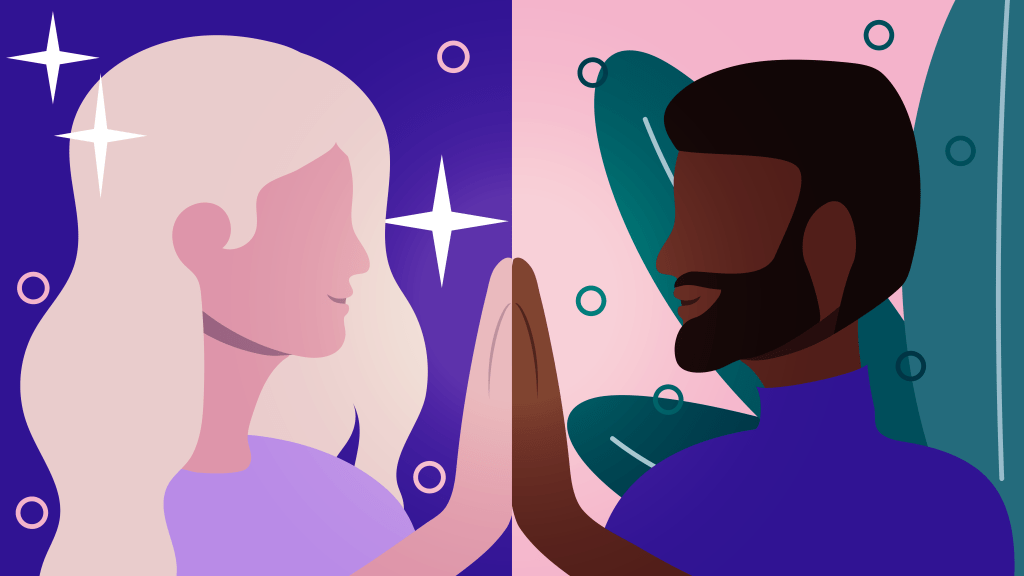
Inclusive language has “made invisible lives far more visible. It has made room for new and complex ways of thinking and talking about the human identity.”
– Saeed, 20191
Who wants to be normal in today’s world? Our differences are what make us unique, form our identities, and shape our personalities. I believe that everyone wants to be recognized, heard, and seen for who we are on the inside. Instead of conforming to normativity, I believe that we should celebrate our differences.
Key Terms
Before getting into the full guide of inclusive language, some key terms need to be addressed to set the foundation for inclusive language.
Diversity is all the ways that people are different and encompasses all the different characteristics that make one individual or group different from another.2 In other words, diversity celebrates what makes us all unique rather than how we are all the same.
Equality is treating everyone as the same.3 From this lens, this means that everyone gets the same thing (i.e., equal pay) without considering differences.
Equity is the “fair treatment, equality of opportunity, and fairness in access to information and resources for all.”3 Or, as I would say, equity is about meeting people where they are at, by taking everyone’s differences into account, to get the same outcomes.
Inclusion is “an action; something we do intentionally.”4 In other words, inclusion is ensuring that there is a fair chance for everyone to be a part of something. The antonym is exclusion, where there are criteria or barriers in place to be able to participate.
Social Categorization is how we make “sense of the world around us by putting individuals into social groups or categories.”5 This consists of race, ethnicity, gender, sexuality, age, ability (or disability), and more.
Intersectionality is the observation of how we are all different, experience various privileges, and have different positions within the world around us have different amounts of social power.6 Intersectionality can also be explained as categorization where we’re put in boxes some chosen and others are are chosen for you.1 because it recognizes the mix of differences that make up human experiences.
Accessibility is proactively removing barriers to allow everyone to be a part of or participate in something. An example is closed captioning (subtitles) on audio and video content for people who have hearing impairments.
Accountability is taking responsibility for our actions and their consequences.7
Before Getting Started
Tackling Biases
Everyone has biases – whether we like it or not. Biases can be conscious, where “someone is quite clear about their feelings and attitudes,”4 or unconscious, which “operates outside of our awareness.”4 We can bring our unconscious biases to the surface by making them a conscious thought.
A practice that I have started to bring my biases to the surface is by questioning my thoughts and feelings as I pass by people on the streets of Minneapolis.
For example, I was in Walgreens running some errands when a male person of color passed by me in the aisle while yelling and singing loudly. My reaction was to step back and create space.
Upon reflection, I questioned if I would have reacted the same if they were white, a child, or a woman. This is a simple yet effective practice to challenge unconscious biases.
Embracing Inclusion
The next step is moving towards inclusion as “accepting our biases is huge–but it’s not enough… We must start asking for and listening to other perspectives, and then acting on what we hear to change what we say or how we proceed.”4
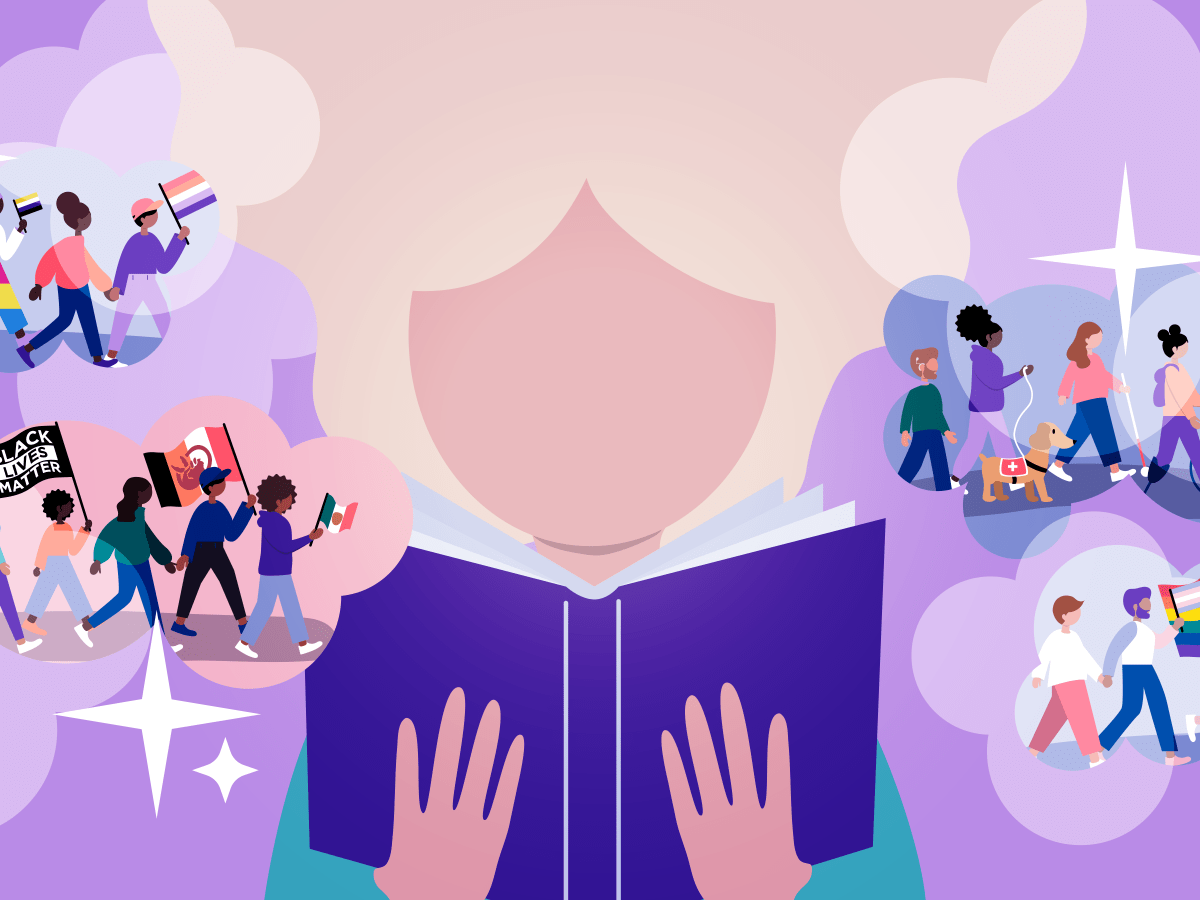
One way we can do this is by diversifying the narratives that we consume. Why is it that when I searched for documentaries to learn about Hispanic culture, the top results were related to drug wars and gangs? Why is it that White cis gay men are featured the most in TV and film over the rest of the queer community?
The danger of only consuming a single story is that it “creates stereotypes and the problem with stereotypes is not that they are untrue, but that they are incomplete. They make one story become the only story.”
– Adichie, 20098
If stereotyping is formulated off incomplete narratives, what would happen if I took that one step further? Taking it further consists of becoming educated on the issues that marginalized social groups face –then challenging societal stereotypes.
The Goal of Allyship
Becoming educated on the challenges that others face takes us to the final step of allyship, which is “when someone uses the privilege they have to level the playing field for members of a specific group of people who lack that privilege.”3
Many actions take place when one is an ally. One is being an active bystander when injustices occur by “speaking up when someone is being silenced.”4 An example would be speaking up for a non-binary friend at a restaurant when a server misgenders them.
Another action of being an ally is standing up for marginalized social groups even when they are not present. An example would be telling your friends who make “that’s gay” comments to politely knock it off.
Further, “instead of liking, sharing, or posting jokes that disparage marginalized people, consider speaking up on their behalf.”9 By doing so, we put “our own privilege[s] at risk to dismantle performative systems and disrupt the -isms that perpetuate the status quo.”4
“I want to be seen in the world, but I don’t want to be judged, I want to be seen for who I am”
– Springs, 201910
Taking an ignorance is bliss approach to life can only get us so far, and that’s why knowledge holds so much power. It holds the power to take account of our positions and privileges and turn them into allyship. By being an ally, we help change the culture, stigmas, and stereotypes of others. We have the power to make society a better and safer place for all – not just those who are at a disadvantage.
More Blogs in the Inclusive Language Series
References
1 Saeed, Fahad. 2019. The importance of using inclusive language. November. Accessed April 2025. https://www.ted.com/talks/fahad_saeed_the_importance_of_using_inclusive_language.
2 Racial Equity Tools. n.d. Racial Equity Tools Glossary. Accessed April 2025. https://www.racialequitytools.org/glossary.
3 Minow, Martha. 2021. “Equality vs. Equity.” American Journal of Law and Equality 1: 167-193.
4 Stovall, Janet M, and Kim Clark. 2022. The Fine Art of Not Saying Stupid Sh*t. Vol. 1. Publish Your Purpose.
5 Len-Ríos, M E, and E L Perry. 2019. Cross-cultural journalism: Communicating strategically about diversity. 2nd. Routledge.
6 Brimhall-Vargas, Mark, and Lawrence Goodman. 2019. What are intersectionality, privilege and positionality? October 8. Accessed January 2025. https://www.brandeis.edu/now/2019/october/intersectionality-privilege-thetake.html.
7 PR Lab. 2024. Ethical Communications: things to think about when considering corporate identity and ethics. August 1. https://prlab.co/blog/ethical-communications/#:~:text=It%20involves%20being%20aware%20of,to%20be%20made%20with%20ethics.
8 Adichie, Chimamanda Ngozi. 2009. The danger of a single story. July. Accessed February 2025. https://www.ted.com/talks/chimamanda_ngozi_adichie_the_danger_of_a_single_story/transcript.
9 Yin, Karen. 2024. The Conscious Style Guide. Little, Brown Spark.
10 2019. You Can’t Ask That. TV Show. Directed by Aaron Smith. Performed by Alice Springs. https://www.netflix.com/watch/81967613?trackId=14170289&tctx=2%2C0%2C6d8f4d09-f517-4b9c-81f8-ee2c9859c9f3-114983612%2CNES_2A279CC44EEB7DBC7449DD03DAB8A5-994911DC4F528C-F0CB45ADD9_p_1744471479609%2CNES_2A279CC44EEB7DBC7449DD03DAB8A5_p_1744471479609%2C%2C%2C%2C81232129%2CVideo%3A81967613%2CdetailsPageEpisodePlayButton
 Amy Nelson Content Creations
Leave a comment